Notes on Buddhist meditation

Slow Photo: BPGTry to sit as still as possible without coughing or fidgeting. This is to see what is happening in the mind and body. The Buddha likened this ‘sitting still’ to trying to train a wild monkey.

Sitting without moving is not a ‘macho’ thing nor is it ‘self-torture’. The idea is to just watch what goes on. There are also insights into the nature of the mind and body which come from being still, inwardly and outwardly. If we have to move, we should do so with awareness to the intention and motive as well as the movements. (more…)

Fear and Suffering, By Corrado Pensa

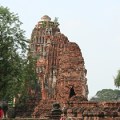
Angkor Wat Cambodia © Janet Novak By way of introduction I will start with Krishnamurti’s words: ‘We are boiling with fear all the time.’ Simple and direct. Sometimes, however, this boiling with fear is not evident. I am specifically thinking of a dharma course a few years ago which I gave on fear and practice. After some time a number of students said,  ‘I didn’t know I had so much fear. I didn’t know that we could, at least partially, hide fear.’ The point is that this all-pervasive quality of fear is an important piece of truth that is very important for us to become familiar with.

Krishnamurti also said, ‘To find out if there is actually freedom one must be aware of one’s own conditioning, of the problems, and above all one must be aware of fear. The self-interest in our life is the cause of fear—this sense of me and my concerns, my happiness, my success, my failures, my achievements. Where there is self-interest there must be fear and all the consequences of fear.’
(more…)

Arthur Braverman

Arthur Braverman  Photo Nao BravermanArthur Braverman was born on December 8, 1942 in Bronx New York City in the neighborhood of Pelham Parkway. He attended New York City College where he got his bachelor’s degree in Physics. After living in Nigeria for two years through Peace Corps he went to Japan to study Zen Buddhism. He studied under Kosho Uchiyama Roshi at Antaiji – a small zen temple for seven years. He married his wife Hiroko and they returned to America together in 1978 where he studied classical Japanese at Columbia University. His first translation was Mud and Water: The Teaching of Zen Master Bassui, the next was Warrior of Zen: The Teachings of Suzuki Shosan, and finally A Quiet Room: The Poetry of Zen Master Jakushitsu. His recent publication was Living and Dying in Zazen, which is a memoir. He now lives in Ojai, CA where he has just published a novel Dharma Brothers.
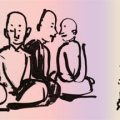
Dharma Brothers: Kodo and Tokujoo, by Arthur BravermanDharma Brothers: Kodo and Tokujoo is based on the lives of two Japanese Zen Masters, how they grew from two ordinary boys, walking very different paths to become extraordinary men, and the deep spiritual bond between them. It is also the story of Japan from 1880 to 1965, of two personal accounts of Zen journeys to enlightenment, and of love and friendship. The story follows the lives of these two Dharma brothers, set against a backdrop of the Japanese-Russian War of 1905, and the rise of fascism in Japan in the 1930s. Kodo was an orphan, brought up in a harsh environment, while Tokujoo was the son of a well-to-do businessman. They both spent years studying in the most stringent Zen monasteries and became life-long friends. Each struggled to find his way clear of the circumstances in which he had been reared. Each sought a way of life offering more meaning and truth, ultimately becoming a different exemplar of Zen practice and living Buddhism.

Photo and biography provided by Nao Braverman

Other posts by Arthur Braverman


Loving kindness and equanimity

Then there is metta and upekkha (loving-kindness and equanimity): just awareness allows us to have metta because it doesn’t judge; it accepts everything as it is. This is what metta is. (more…)

No Beginning, no End, by Dalai Lama

Stupa in Burma Photo: © John AskeQuestioner: How does one arrive at the conviction that our consciousness has no beginning or end?

Dalai Lama: Generally speaking, there are two ways of coming to such a conclusion. One is through logical reasoning and the other is from seeing that if consciousness did have a beginning and an ending, a lot of contradictions and mysteries could not be explained. So, since the latter viewpoint has many inconsistencies, we can arrive at the conclusion that it must be the other way around i.e. that consciousness is without beginning or end. (more…)

Samatha and Vipassana

Quote: Some people think that samatha isn’t necessary, whilst others think it is absolutely essential. There are arguments about it.

" Some people think that samatha isn’t necessary, whilst others think it is absolutely essential. There are arguments about it."

In the Theravada teachings on samatha-vipassanà, they divide meditation ― that English word ‘meditation’ ― into tranquillity and insight (samatha and vipassanà). Now, in Thailand there are all kinds of views about samatha and vipassanà, and within the vipassanà world, there are all kinds of views about how to practise it. Some people think that samatha isn’t necessary, whilst others think it is absolutely essential.

There are arguments about it. Some say you have to get the jhànas (absorptions) before you can do vipassanà (there are certain elements that think like this), and then there are others that say, ‘Well no, don’t do samatha, just straight vipassanà, that’s all that’s necessary.’ Now, teachers speak from their own experience, so this has to be taken into account. It isn’t that all these opinions are wrong or that one is absolutely right or absolutely wrong. As Ajahn Chah used to say, ‘True but not right; right but not true.’ (more…)

Bodhisattva Vow

Kuan Yin Bodhisattva

I take the Buddha as my refuge

I take the Dharma as my refuge

I take the Sangha as my refuge

Birth as a human being is rare and it is rarer still to become a Bodhisattva. Why? Because one may not hear the true Dharma; one may be insensitive to the suffering in the world or one may be misled by false teachings. (more…)

True freedom is emancipation from our concepts. Anam Thubten


There is a universal tendency to believe that we will find what we are searching for somewhere else.

True freedom is emancipation from our concepts, from the psychological veil that is distorting our view of the way things are. When such freedom is attained, we begin to see that life is inherently perfect, just as it is, and we end up swimming effortlessly in an abundance of joy and love. But there is a universal tendency to believe that we will find what we are searching for somewhere else. (more…)

Corrado Pensa

Photo: Corrado PensaCorrado Pensa teaches vipassana retreats in Europe and in the USA. He is cofounder and guiding teacher of the Association for Mindfulness Meditation in Rome, a professor of Eastern religions at the University of Rome and a former psychotherapist.

Other posts by Corrado Pensa


Follow

Get every new post delivered to your Inbox.

Join 58,998 other followers

%d bloggers like this: