Dukkha is often misunderstood. In its most basic sense, it refers to the pervasive sense of unsatisfactoriness that underlies human experience. It includes obvious forms of suffering, such as pain, illness, and loss, but also more subtle forms — such as the restlessness, anxiety, and dissatisfaction that persist even in the midst of comfort and pleasure. Dukkha arises because we live in a world of impermanence and change. No matter how much we strive to secure happiness, the objects of our desire — whether they are material, emotional, or intellectual — are all subject to decay and loss. The pleasures we seek are fleeting, and the attachments we form inevitably lead to disappointment when they pass away.
The Buddha’s insight into Dukkha is not pessimistic, as it is sometimes portrayed. Rather, it is a realistic appraisal of life as it is. To ignore Dukkha is to remain trapped in a cycle of endless craving and attachment, always seeking fulfilment in things that cannot provide lasting satisfaction. To face it with clarity and courage, however, is to begin the path to freedom.
This is where the teachings of Anicca (impermanence) and Anattā (not-self) come into play. They deepen our understanding of Dukkha and point to the root causes of suffering.
Image
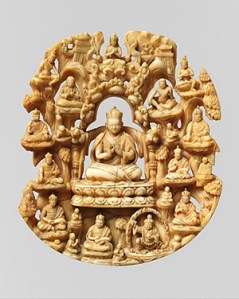
Roundel with Karma Lineage
Tibet 16th Centry.
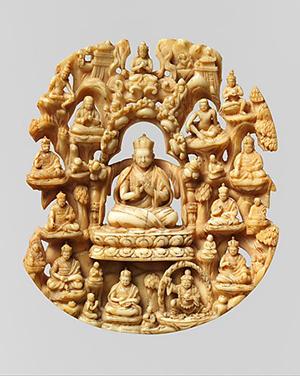
The monks depicted here are dressed in the robes of the Karma tradition of Tibetan Buddhism, and the central figure likely represents Mikyo Dorje (1500–1599), the eighth head of that lineage. The other seven monks represent earlier incarnations of him, including Marpa (1012–1098) and Milarepa (1040–1123). Vajradhara presides above, and Mahakala, the order’s great protector, stands below.
© The Metropolitan Museum of Art

‘Dukkha is often misunderstood.’ is an extract from Buddha as Person, Buddha as Experience. A spiritual travelogue that invites readers on an inner journey guided by the Buddha — one of the most profound figures in human history.
Share:

Categories: Buddhism, Buddhist Insights, Everyday Buddhism
 Buddhism now
Comments