Buddhadāsa Bhikkhu introduces the Pāli word ‘atammayatā’ as something that might seem a little bit strange, but we’ve been traveling all over looking for it without even knowing it.
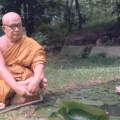
Buddhadāsa Bhikkhu introduces the Pāli word ‘atammayatā’ as something that might seem a little bit strange, but we’ve been traveling all over looking for it without even knowing it.
‘To keep observing the nature of our thoughts generates a mind emptied of Dukkha, and so, is the very best knowledge there is. Through it we gain familiarity with the realization or awareness of emptiness.’
Buddhadasa Bhikkhu

‘The most essential meaning of the word ‘study’ is of the unceasing, dedicated observation and investigation of whatever arises in the mind, be it pleasant or unpleasant. Only one familiar with the observation of mind can really understand Dhamma.’
Buddhadasa Bhikkhu

‘When we say that there is no self, people get worried, or angry. Their attachment and identification to this idea of a self is so strong.’
Buddhadasa Bhikkhu
‘When one has perfected this practice (Atammayata), there is no “person” who watches “things”. There are no “things” to be watched. There is no “watcher”. There is no “feeling of watching”. All of these have disappeared.’
Buddhadasa Bhikkhu
‘The Buddha said that the assertion that all things are empty refers to nothing other than the awareness that they are empty of selfhood.’
Buddhadasa Bhikkhu
‘So where do we learn? We learn here in this very body with its perceptions and mental activity.’
Buddhadasa Bhikkhu

‘If, bhikkhus, there were no not-born, not-brought-to-being, not-made, not-conditioned, no escape would be discerned from what is born, brought-to-being, made, conditioned.’
Buddhadasa Bhikkhu
 Buddhism now