As illuminating for new enthusiasts of Chinese Buddhist art as for scholars and connoisseurs, Wisdom Embodied is a glorious tour of the Metropolitan’s unparalleled collection, certain to earn its place as a classic in the field…

As illuminating for new enthusiasts of Chinese Buddhist art as for scholars and connoisseurs, Wisdom Embodied is a glorious tour of the Metropolitan’s unparalleled collection, certain to earn its place as a classic in the field…
The process whereby Buddhism—which first began as the deeply internal experience of just one ascetic practitioner—has over time borne fruit within vastly different races, climates, cultures and histories, might be likened to the way volcanic magma breaks through the earth’s crust and gushes heavenwards then flows down in every direction…

‘Oh, it’s not finished yet,’ replied the senior. ‘Now do the same practise, but this time think about, and try to understand, yourself.’

The medicine which cures the disease is the knowledge and practice that gives birth to emptiness. When emptiness has appeared it will be the cure of the disease and alter recovery from the disease there will be nothing save emptiness, the state void of Dukkha and. void of the mental defilements that are the cause of Dukkha

The subtlety of seeing and hearing transcends mere colours and sounds. The whole affair functions without leaving traces, and mirrors without obscurations…
If there’s someone to sweep them and look after them, they’re beautiful. They’re not dirty — because there’s someone to look after them. It’s because there’s someone looking after them that they can be beautiful…

One comes to see that the real agony would be to lie not on dozens of spikes, but on just one big spike!
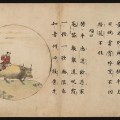
In Zen, a herdboy’s search for his lost oxen has served as a parable for a practitioner’s pursuit of enlightenment since this Buddhist sect’s early history in China. In the eleventh century, the Song-dynasty Zen master Guoan Shiyuan (active ca. 1150) codified the parable into ten verses (gāthā), recorded and illustrated in this handscroll…
 Buddhism now