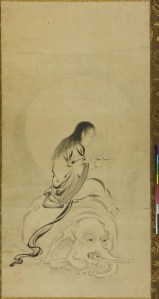
Samantabhadra (Monju Bosatsu) seated upon an elephant.
Question: While it is clear that those who have not yet realised Buddha-dharma should practice zazen and attain realisation, for those who have already understood the Buddha’s correct teaching, what should they expect from zazen?
Dogen: Although we should not talk about dreams with careless people, nor give a boat pole to a woodcutter, nevertheless I will give instruction about this.
To suppose that practice and realisation are not one is a view of those outside the way; in Buddha-dharma they are inseparable. Because practice within realisation occurs at the moment of practice, the practice of beginner’s mind is itself the entire original realisation.
When giving instruction for zazen practice, we say that you should not have any expectation for realisation outside of practice, since this is the immediate original realisation. Because this is the realisation of practice, there is no boundary in realisation. Because this is the practice of realisation, there is no beginning in practice.
In this way, Shakyamuni Tathagata and Venerable Mahakashyapa were both fulfilled by practice within realisation; great master Bodhidharma and Hui Neng— high ancestor Dajian — were drawn in and turned by practice within realisation. The ancient way of abiding in Buddha-dharma has always been like this.
Practice just here is not apart from realisation. Fortunately, each one of us has individually inherited this wondrous practice; each beginner’s endeavour of the way brings forth original realisation in the realm of the unconstructed. Know that in order not to divide this realisation, which is inseparable from practice, Buddha ancestors always caution you not to be lax in your practice. Release this wondrous practice and original realisation fills your hands. Liberate original realisation and wondrous practice is upheld throughout your body.
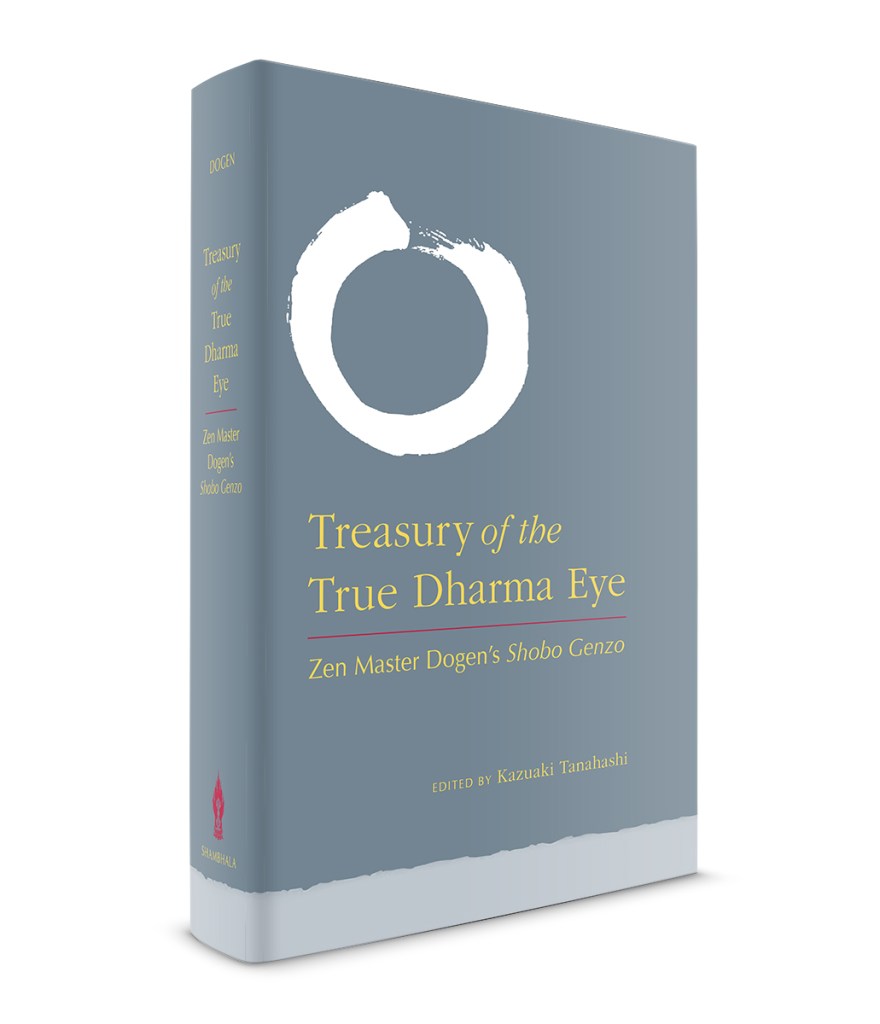
From: Treasury of the True Dharma Eye
Zen Master Dogen’s Shobo Genzo
Edited by Kazuaki Tanahashi
Shambhala, ISBN 9781590309353
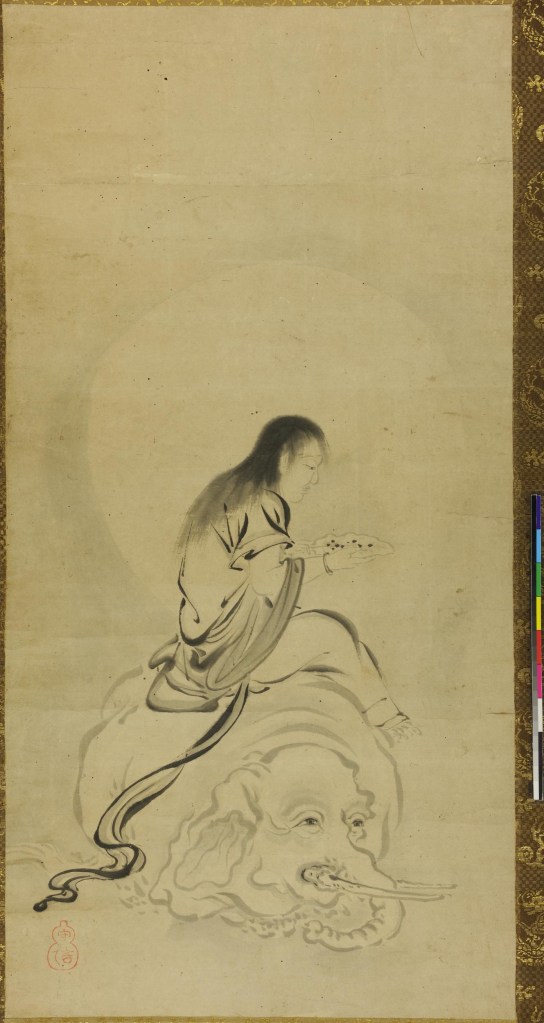
Image:
Samantabhadra (Monju Bosatsu)
seated upon an elephant.
Japan, 1607-1650
© The Trustees of the British Museum
Share:

Categories: Buddhism
 Buddhism now
Comments