Buddhist video: Part two: An introduction to mindfulness meditation by Sangye Nyenpa Rinpoche at Benchen Monastery on 27 April 2014. (about 1 hour 16 minutes)

Buddhist video: Part two: An introduction to mindfulness meditation by Sangye Nyenpa Rinpoche at Benchen Monastery on 27 April 2014. (about 1 hour 16 minutes)

Do not do anything (good or bad) and do not even do this not-doing; then straightaway one reaches that place where there is no concern for external affairs, that vast and peaceful place where there are absolutely no obstructing thoughts…
This oversize rendition of the character for “virtue” (toku 悳) reflects the exuberant spiritual energy projected by Hakuin Ekaku, who was one of the foremost proponents of the revival of the Rinzai sect of Zen Buddhism in late Edo Japan. Originally composed by Chinese historian and scholar of Confucianism Sima Guang (1018–1086), the inscription reads:

Ethnicity and Buddhism in the UK, by Noy Thomson (Thai name Mom Rajawongse Saisvasdi Svastis Thomson) at The ‘British Buddhist Landscape —Transplantation and Growth’ conference. Short film, about 17 minutes.
Buddhist video: An introduction to mindfulness meditation by Sangye Nyenpa Rinpoche at Benchen Monastery on 27 April 2014. (about 1 hour 23 minutes)
This is what we are all involved with. This is what life is for us at this time. We are all alive now, living within the restrictions of our bodies and minds. Whether you like it, approve of it, or whatever, it doesn’t matter…
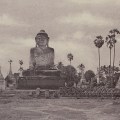
Captain Linnaeus Tripe (1822-1902) was a pioneer of early photography who created an outstanding body of work depicting the landscape and architecture of India and Burma (now Myanmar) in the 1850s. This major presentation of Tripe’s photographs most striking views taken between 1852 and 1860.

It is said that for the absolute, one has wisdom, and for the relative, one has compassion. After his enlightenment Buddha did not need to teach people in order for them to become essentially wiser; he did so in order to try to help people, to provide them with a means by which some of them could come to the same understanding that he had reached…
 Buddhism now