In any religion there is the exoteric side — the tradition and forms, scriptures, ceremonies and disciplines—and the esoteric, which is the essential nature of that. So, in much of what we call religion, the emphasis is really on the external form.

Buddhist encyclopedia
In any religion there is the exoteric side — the tradition and forms, scriptures, ceremonies and disciplines—and the esoteric, which is the essential nature of that. So, in much of what we call religion, the emphasis is really on the external form.

The Buddha: Without mark is this perfection of wisdom. Just as the element of space and the element of air cannot be approached by the mark of the total reality of any dharma, just so the perfection of wisdom.
The Questions of Suvikrantavikramin. Perfect Wisdom: The Short Prajnaparamita.
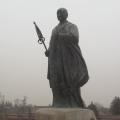
On my journey, I think I found the other side of Buddhism, predominately the role of the mind. Buddhism is not as criticised or attacked in the historical Marxist approach, the materialistic approach which maintains that the mind is really not important and that our material condition determines everything. Some of the monks in the monasteries laid down their lives to defend their faith…

The idea of writing a biography of a book: what a great idea. Well done Princeton University Press for coming up with ‘Lives of Great Religious Books’. Lives of Great Religious Books is a new series of short volumes that… Read More ›
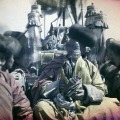
Wishing the Dalai Lama a happy birthday.
There is a saying in Tibetan: ‘Although your realization is high, like that of a divine being, you should maintain your way of life in conformity with other people.’

At that time, out of this very skill in liberative technique, Vimalakirti manifested himself as if sick. To inquire after his health, the king, the officials, the lords, the youths, the aristocrats, the householders, the businessmen, the townfolk, the countryfolk, and thousands of other living beings came forth from the great city of Vaisali and called on the invalid. When they arrived, Vimalakirti taught them the Dharma…

Pure Land Buddhism is one of the major schools in the East, yet has hardly made a dent here. I remember once hearing it being described as too ‘Christian’ for Westerners, yet almost all of the other schools encompass the notion of a Pure Land in some way or other. Even in Theravada the three Refuges can easily be interpreted in a Pure Land way. The very essence of it is that one is taking refuge…

This handscroll depicts hand gestures known as mudras in Sanskrit, the Indian language in which many early Esoteric Buddhist texts were written. In Japan, the gestures are called insō, the Japanese term for a Chinese word that combines the characters for ‘seal’ and ‘form.’
 Buddhism now