As illuminating for new enthusiasts of Chinese Buddhist art as for scholars and connoisseurs, Wisdom Embodied is a glorious tour of the Metropolitan’s unparalleled collection, certain to earn its place as a classic in the field…

As illuminating for new enthusiasts of Chinese Buddhist art as for scholars and connoisseurs, Wisdom Embodied is a glorious tour of the Metropolitan’s unparalleled collection, certain to earn its place as a classic in the field…
The process whereby Buddhism—which first began as the deeply internal experience of just one ascetic practitioner—has over time borne fruit within vastly different races, climates, cultures and histories, might be likened to the way volcanic magma breaks through the earth’s crust and gushes heavenwards then flows down in every direction…
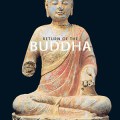
In 1996 around 400 Chinese stone sculptures of the Buddha were discovered in Qingzhou, China…

Short film about 5 minutes. Hakuin’s self-taught, spontaneous, yet masterly and inspired painting and calligraphy, just like his teachings and writings, expressed the mind and heart of Zen for monks and lay followers alike.
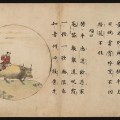
In Zen, a herdboy’s search for his lost oxen has served as a parable for a practitioner’s pursuit of enlightenment since this Buddhist sect’s early history in China. In the eleventh century, the Song-dynasty Zen master Guoan Shiyuan (active ca. 1150) codified the parable into ten verses (gāthā), recorded and illustrated in this handscroll…
Chinese Chan masters in the earlier periods did not possess a unified definition of Tathāgata Chan and Patriarchal Chan—instead, they wrote with rather ambiguous meanings and loose definitions…
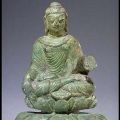
A remarkable collection of religious items from diverse lands was discovered during archaeological excavations on the Swedish island of Helgö. Undoubtedly the most extraordinary find discovered during the excavations at Helgö was a small, bronze Buddha…

‘Nothing of this sort needs to be coped with. Why? Because, if avoidable, it will be avoided. If unavoidable, it will be borne. If sufferable, it will be suffered. If insufferable, it will be wept at.’
 Buddhism now