This is what we are all involved with. This is what life is for us at this time. We are all alive now, living within the restrictions of our bodies and minds. Whether you like it, approve of it, or whatever, it doesn’t matter…
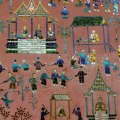
This is what we are all involved with. This is what life is for us at this time. We are all alive now, living within the restrictions of our bodies and minds. Whether you like it, approve of it, or whatever, it doesn’t matter…
Extract from a talk given at the Buddhist Publishing Group 2002 Summer School. Around 3 minutes

The matter of “I” and “mine” is the single essential point of the Buddhist teachings. It is the one thing which must be completely purged. It follows that here lies the knowing, understanding, and practice of all the Buddhist Teachings without exception.

Talking about universal love is a very inspiring subject. There is nothing wrong with contemplating universal love, either. But if that’s all we are doing, then it can be merely a whitewash over inner pain and anguish. We might want to love all beings and live in a world of unity and total love. That might be a very appealing idea. What is it that prevents us from that unity? If we trace it back, we will find it’s the ignorance that we have about ourselves…
All sensory objects satisfy us temporarily, but then we have to find something else to be absorbed into — to read, think, go to sleep, get drunk, take dope, have sex. It goes on and on, without reflection…

There is a word in Buddhism that covers this completely, the word sunnata, or emptiness, emptiness of selfhood, emptiness of any essence that we might have a right to cling to with all our might as being ‘mine’…

When I first came across this word ‘Suchness’ in Zen literature, I thought, ‘What the heck is Suchness?
The moods, once so solid, now seem softer and there is a general uplift towards calmness, peace and joy…
 Buddhism now