The Buddhas are delighted when sentient beings are happy and distressed when they are hurt. So by loving them I will please all Buddhas and by harming them I will injure the wise. For just as someone whose body is engulfed by fire finds no pleasure in desirable objects, it is impossible for the compassionate ones to be joyous when a sentient being is in pain…
Tibetan
The Four Reminders, by Ringu Tulku Rinpoche
Each of the reminders brings home the unerring message of change and the opportunity we have to practice meditation and study the teachings of the Buddha
The Tibetan Chan Manuscripts
These manuscripts, found in the caves of Dunhuang, include the only surviving texts of a living ‘Tibetan Chan’ tradition. They give us a snapshot of the early Chan tradition from the eighth and tenth centuries…
Why should I be angry with him? by Acarya Shantideva
If someone does wrong out of confusion and someone else gets angry because he is also confused, who can be said to be innocent and who guilty?
Imagine that one person wakes up from a dream, Acarya Shantideva
Imagine that one person wakes up from a dream in which he experienced a hundred years of happiness and another wakes up from one in which he experienced only a brief moment of happiness. For both of these people their happiness will never return…
The All-Knowing Buddha: A Secret Guide
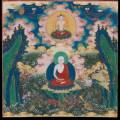
The album was first brought to the West in 1923 by a Christian missionary who acquired it from a Buddhist monastery in Jehol, Inner Mongolia. It is believed to have been commissioned by a Mongolian patron during the Qing Dynasty (1644-1911), whose rulers sponsored extensive artistic production and supported Tibetan Buddhist monasteries. Drawing together Tibetan Buddhist content with the aesthetic traditions of Qing-era Chinese art in Inner Mongolia, the album exemplifies the rich patterns of cross-cultural exchange that characterized the period and region…
Two Tibetan works on Chan from the Tenth-century
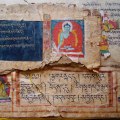
Later Tibetan accounts agree that the Chinese side lost, leading to expulsion of Chan (Zen) Buddhism from Tibet. However, evidence from Dunhuang, such as this manuscript, suggests that Chan’s influence in Tibet continued well into the tenth-century.
Buddha’s Word: The Life of Books in Tibet and Beyond
Many of the artefacts, prints and manuscripts in the exhibition have never been on public display before. Exhibits include some of the oldest illuminated Buddhist manuscripts from the first decades of the eleventh century as well as specimens of skilfully illuminated wooden covers; a quartet of scroll paintings brought back from the infamous Younghusband Expedition; and a gift from the 13th Dalai Lama…