A Journey from Humiliation to Humility, by Corrado Pensa

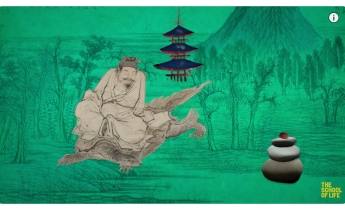
Buddha Photo: © @BaganLodge I would like begin by reading a quote from Hubert Benoit, a French doctor who, amongst other things, studied, practised and experimented with Zen. He had a deep and creative way of conceptualising the core of the practice, and at one time he said, ‘All suffering, by humiliating us, modifies us. But this modification can be of two sorts that are radically opposed. If I struggle against humiliation it destroys me and increases my inner disharmony. But if I let it alone without opposing it, it builds up my inner harmony. So, when I start understanding,’ he says, ‘I begin to see that all my negative states, basically, are humiliations, and that up to this point I have taken steps to give them other names. Then I become capable of feeling myself humiliated and vexed without any other image within me, and I become capable of remaining there, motionless.’ He concludes, ‘From the moment I succeed in no longer moving in my humiliated state, I discover with surprise that there is the unique harbour of safety, the only place in the world in which I can find perfect security.’ Somewhere else he also speaks about ‘resting on the stone bed of discomfort’. Read more »

Still Flowing Water, by Ajahn Chah

 Still Flowing Water by Ajahn Chah A collection of eight new or significantly revised translations of Ajahn Chah’s Dhamma talks by Thanissaro Bhikkhu. Two of them have never been translated before into English, and four of them are based on entirely new Thai transcriptions of the best and most complete source recordings available.

Dhamma is a condition that can cut through and reduce the problems and difficulties in the human heart—reducing them, reducing them until they’re gone.

Ajahn Chah

Ajahn Chah © forestsangha.org

From Abhayagiri

mobi  ePUB

A Meditative Life, by Bodhidhamma Bhikkhu

Reclining Buddha at Polonnaruwa, Sri lanka. Photo: Hazel WaghorneIn the last discourse given by the Buddha called the Parinibbana Sutta, the Discourse concerning his passing away into total nibbana, there is a special section on body movement and posture:

And again when the meditator is walking, she or he is aware of walking, when standing, aware of standing, when sitting, aware of sitting, when lying down, aware of lying down. Whatever position or movement the meditator is in, that is what she or he is aware of.

In other words, sitting meditation is only a part of the meditation. What the Buddha wanted us to do was to develop a meditative life—to know what we are doing at all times, leading a life of full-time awareness. Read more »

Teachings of the Buddha to his son ­Rahula talk by Corrado Pensa

Reflecting on intention, desire and action. (33mins 2006)


Corrado PensaCorrado Pensa is co-founder and guiding teacher of the Association for Mindfulness Meditation in Rome.

Just One Thing, by Taizan Maezumi Roshi

Repose at Unryu-in Photo © @KyotoDailyPhotoLife always presents us with pairs. There are always two aspects that complement each other—sun and moon, day and night, mother and father, life and death. But how easily our minds become occupied in a one-sided way! And when we see one aspect and ignore the other, somehow we feel incomplete and the circumstances of our lives seem insufficient. Read more »

And what, Monks, is Ageing? by Sylvia Swain

And what, monks, is ageing? In whatever beings of whatever group of beings, there is ageing, decrepitude, broken teeth, grey hair, wrinkled skin, shrinking with age, decay of the sense-faculties—that, monks, is called ageing.  (Buddha)

Rakan (Sanskrit: arhat) in mossy garb at Sekizanzen-in. Photo © @KyotoDailyPhotoThis is not simply and literally about that trilogy of—disease, old age and death. Sadly, no one is ever too young to become ill or die. But they say that, whatever age we die, after the heart stops we have a few minutes left in which the brain is still active. Now in a timeless realm and uninterrupted by any sound, the consciousness can be rounded out, made whole, according to the life—conscious and unconscious—of that being. People who have a religion which provides for after-death welfare, such as in Tibetan Buddhism, are less troubled. But those without such beliefs, can trust to nature’s spiritual intentions for them, as they, like plants, struggle instinctively and unerringly towards the light. Read more »

The Bardo State, by Tulku Urgyen Rinpoche

Rainbow over Totnes, EnglandIn the bardo state, you believe you have eyes that see. However, everything is merely experience, whether it is the bardo or the hell realms or any other place. It is all your personal experience. Just because one believes one has eyes and can therefore see does not change the fact that what one is experiencing is basically mind experience. When you dream at night you see all sorts of different things. Are those things seen with the eyes? You believe you have eyes in the dream, don’t you? You walk around and look all over, yet in reality your eyes are closed and you’re in bed. Read more »

Mindfulness a talk by Ajahn Sumedho

Ajahn Sumedho Buddhist Summer School 2001.The Buddhist meditation practice of mindfulness, a talk given by Ajahn Sumedho at the 1994 Buddhist Summer School in Leicester, England.

(59 mins some background noise for the first 40 seconds.)


Subjects include: Mindfulness, Consciousness, and how we create ourselves.

More posts by Ajahn Sumedho here.

The Awakened Self, Harada Sekkei Roshi

The following is from a 1993 television programme, ‘The Awakened Self’—an interview with Harada Sekkei, abbot of Hosshinji Training Monastery by Shiratori Motoo, a former NHK-TV presenter.

Mr Shiratori: Excuse me for disturbing you during the middle of sesshin.

Harada Roshi: Thank you for coming.

S: Sesshin is a time when people concentrate on zazen. This is an important thing in Zen, isn’t it?

Roshi: Yes. Going back for quite a long time, sesshin is an important activity which has been strictly practised in Zen temples. Although it may sound a bit strange to say, sesshin is very effective or fruitful for a person’s zazen. It’s definitely a way of expanding a person’s state of mind.

S: You follow quite a strict schedule during sesshin, don’t you?

Dartington Hall, Totnes, DevonRoshi: We get up at 4:00 am and until 9:00 pm spend most of our time in the zendo. We, of course, sleep in the zendo, as well as eat there, too.

S: You really pack it in, don’t you?

Roshi: Yes. But not only within the zendo, in the individual rooms or while drinking tea after meals as well. These activities must all be Zen. Zen is walking, sitting, standing, and lying down; in other words, all of our everyday activities. My request is that especially during sesshin everyone concentrates on each activity. Read more »

The End of the Story, by John Aske

Watchfulness is the path to immortality and thoughtlessness the path to death. The watchful do not die, but the thoughtless are already like the dead.

[Dhammapada v21]

Photo of a moss wall in Devon, EnglandWhen we wake from a dream, we seem to leave a fantasy world and enter staid reality again. But we have merely exchanged one kind of story for another.

We feel we need those beginnings, middles and ends. We build a world in our minds, which is a copy of the real world and deal with that in preference to the original. And we only update it when something goes wrong and our copied version clearly does not fit. We need a landscape made of time to find our way round. Even our memories are constructed and edited all the time. When we go back to look at familiar things many years later, they don’t look the same. We change and adapt all the time, not only physically, but mentally and as we do so we alter all those monuments and memories to make them fit the things that are around us now, and the way we would like to remember things. Read more »

Follow

Get every new post delivered to your Inbox.

Join 61,582 other followers

%d bloggers like this: