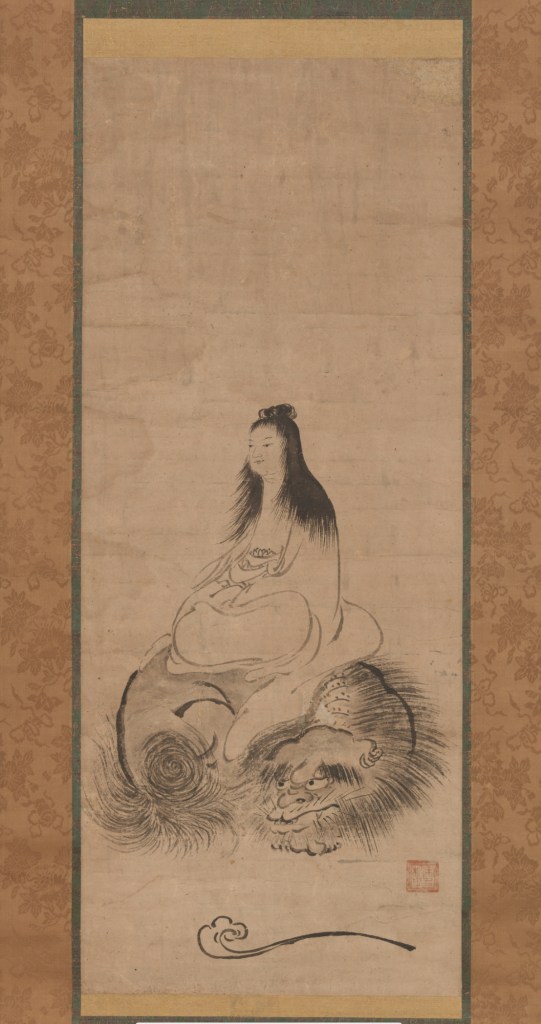
Monju on a Lion
Shūsei Japanese, late 15th century
Manjushri, the bodhisattva of wisdom known as Monju in Japan, sits cross-legged on the back of his lion. Monju appears as a youth in flowing robes, his hair worn long and loose; one of his attributes, a scepter, is placed casually on the ground before him. Although it is a decidedly carefree interpretation, the iconography seen here* is consistent with works by painters affiliated with the Zen monastery Tōfukuji in Kyoto.
The lion symbolises the wisdom of the Buddhas teachings.
The Metropolitan Museum of Art.
Monju, the Bodhisattva of Wisdom by Itō Jakuchū, second half of the 18th century.
Museum of Fine Arts, Boston
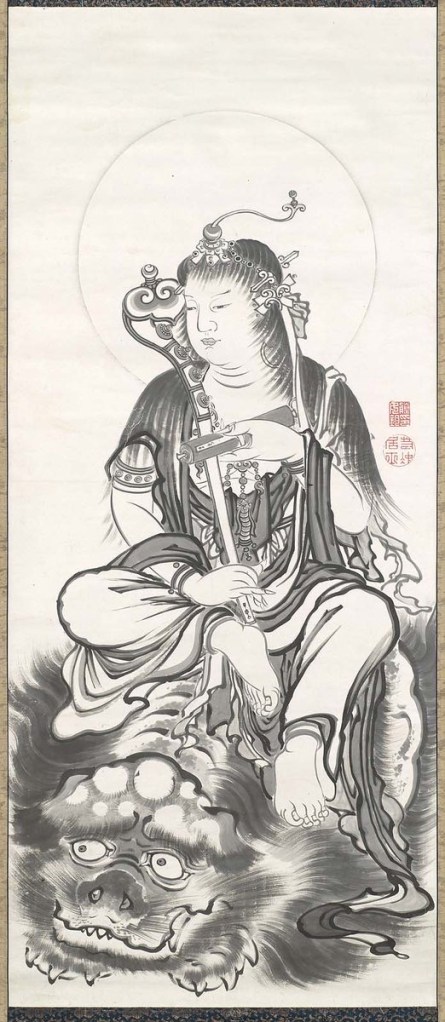

Monju, the Bodhisattva of Wisdom 文殊菩薩像 Artist unknown, Japanese Japanese Muromachi–Edo period 16th–17th century.
Museum of Fine Arts, Boston
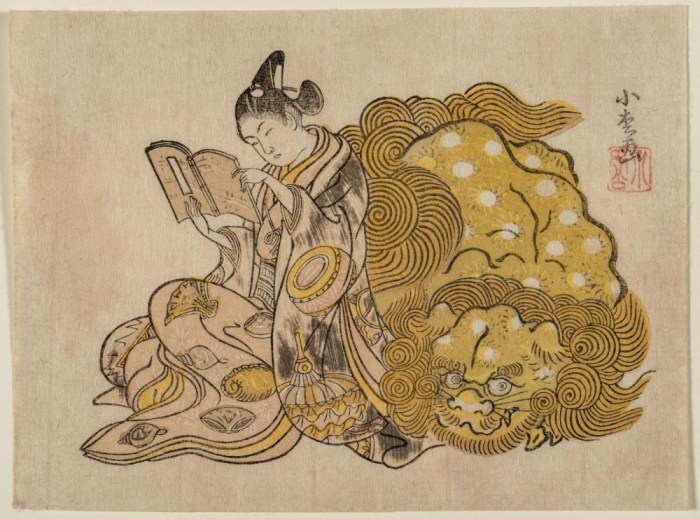
Young Man as the Bodhisattva Monju 見立文殊Komatsuken (Japanese) Japanese Edo period 1765 (Meiwa 2)
The text he’s reading is probably the Prajnaparamita.
Museum of Fine Arts, Boston

Monju, the Bodhisattva of Wisdom, and Lion 文殊獅子図Yamaguchi Sekkei (Japanese, 1644 – 1732) Japanese Edo period.
Museum of Fine Arts, Boston
Monju, the Bodhisattva of Wisdom, and a Lion 獅子に文殊図Oki Tanchû (Japanese, dates unknown) Japanese Edo period first half of the 19th century.
Museum of Fine Arts, Boston

Images with thanks to The Metropolitan Museum of Art and Museum of Fine Arts, Boston.
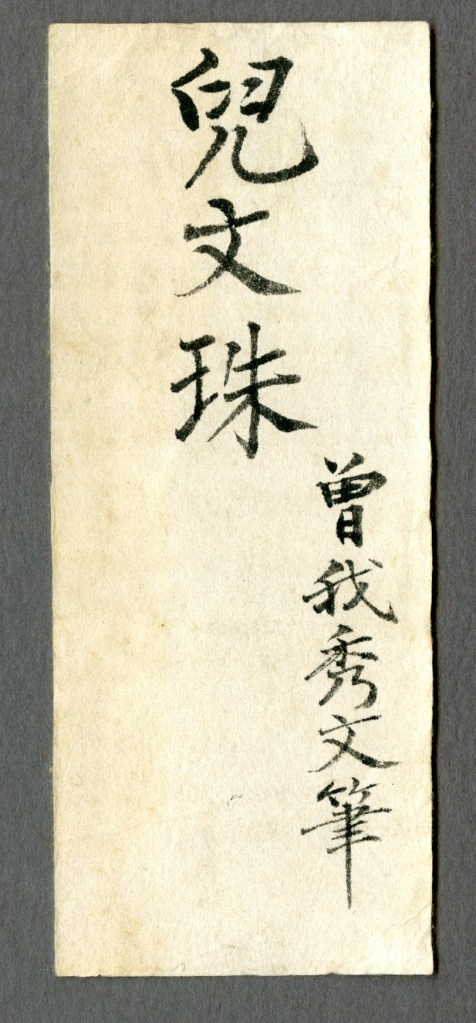
* The iconography seen here is consistent with works by painters affiliated with the Zen monastery Tōfukuji in Kyoto.
The Metropolitan Museum of Art.

 Buddhism now
Comments