
The Tathagata is he who speaks that which is true, he who speaks that which is fundamental, he who speaks that which is ultimate. He does not speak that which is deceitful, nor does he speak that which is alien. There is no mistake in even one phrase or line of the discourses of the World Honoured One. It is simply that when ordinary people hear a true discourse, because of their ignorance, there are a thousand variations and ten thousand distinctions. It’s like squinting your eyes to make one moon appear as two. Once you see, after clarifying your true nature, all words return to the self like waves by the thousands returning to the sea. It is said in a sutra: ‘In the hundred thousand Buddha lands, with the exception of discourses of expedient means, there is only the dharma of One Vehicle, not a second, nor a third.’ This One Vehicle is the One Mind. Those who seek the Buddha and dharma outside of mind are all children of rich men who have forgotten where their homes are. When you awaken to the unique and wonderful dharma of your true nature, it is as if the lost child had come home.
All of you! If you want to return to your homes, simply wake up to your true nature. This mind-nature is the original source of all Buddhas. It is the names of all the sutras. Sometimes it is referred to as the Unique and Wonderful Dharma, sometimes as Perfect Awakening, sometimes as Dharani, sometimes as the Realm, sometimes as the World, sometimes as the Pure Land, sometimes as the Dharma World of the Avatamsaka Manifold, sometimes as the Storehouse of the Tathagata, sometimes as the Eastern Buddha King of Mount Sumeru, sometimes as the Tathagata of the Land of Fragrance, sometimes as Amida, and sometimes as Yakushi, Fugen, Monju, Kannon, and Jizo. All of these names simply point to the One Mind. Though there are ten thousand different names, there are not even two dharma realities. For that reason it is written in a sutra: ‘The teachings in the sutras are fingers pointing to the moon. When you see the moon yourself, you realise there is no moon to point to after all.’ The enlightenment in which you see your true mind and realise your true nature is transmitted outside of the scriptures; it is not based on names and words. That is why it is said: ‘When you see the moon, you know there is no moon to point at.’
Reprinted with the kind permission of Arthur Braverman.
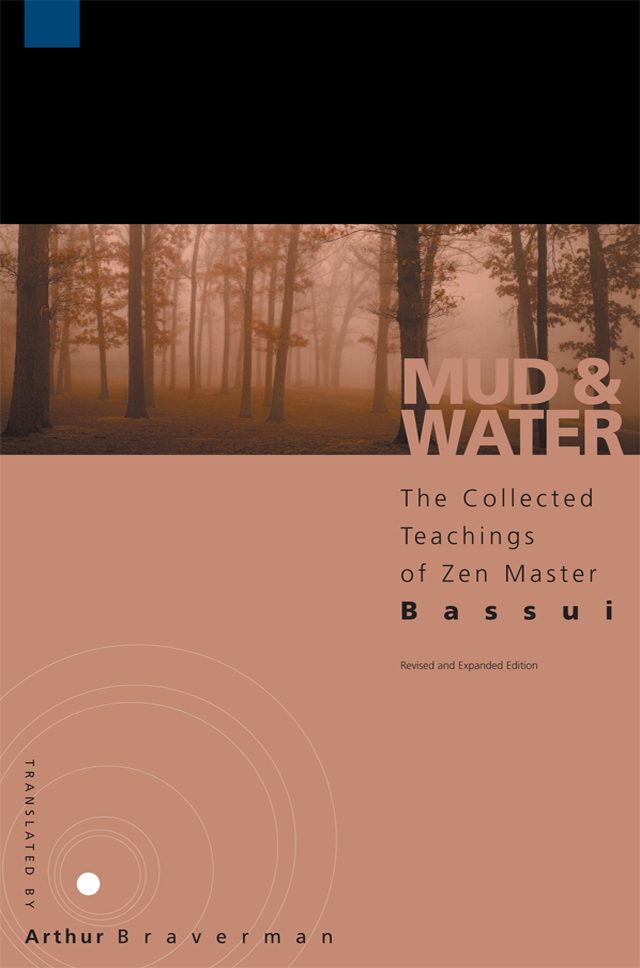
Book extract from: Mud and Water: A Collection of Talks by the Zen Master Bassui, translated by Arthur Braverman.
2007 © Arthur Braverman, All rights reserved.
ISBN: 0-86171-320-6 Wisdom Publications.
Arthur’s other books include:
Living and Dying in Zazen, Warrior of Zen: The Teachings of Suzuki Shosan,
A Quiet Room: The Poetry of Zen Master Jakushitsu,
Dharma Brothers Kodo and Tokujoo: A Historical Novel Based On The Lives Of Two Japanese Zen Masters,
Discovering the True Self: Kodo Sawaki’s Art of Zen Meditation
The Old Buddha, Kozan Kato: The Story of a Farmer-monk
Arthur lives in Ojai, CA.
Click here to read more posts from Arthur Braverman.
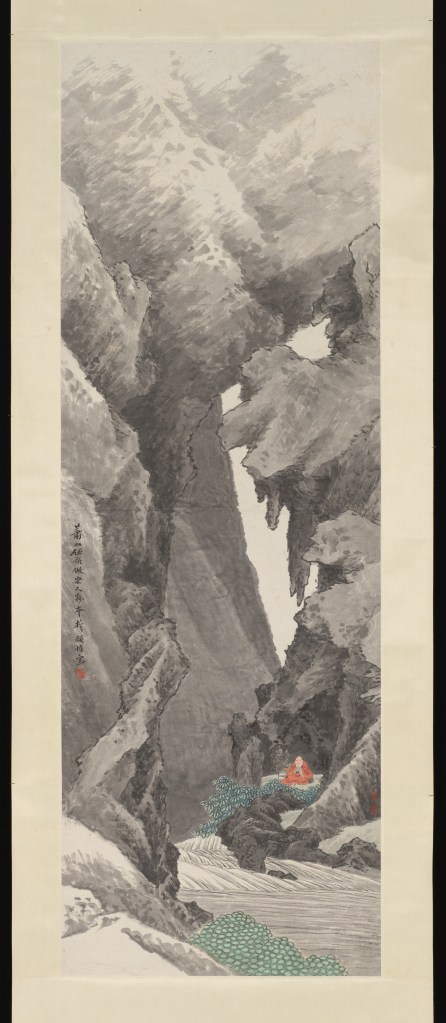
Image: Meditation in a Cave,
Artist: Ren Yu (Chinese, 1853–1901). Chinese
Ren Yu was the youngest of the Four Rens, but he nevertheless was able to create his own distinctive style of painting. In this emotionally charged landscape, a monk-like figure sits calmly within the recesses of a jagged overhanging cliff that fills the height of the picture. An opening in the mountain directly over his head may represent the radiance of Buddhist enlightenment.
With thanks to the The Metropolitan Museum of Art.
Share:

Categories: Chan / Seon / Zen, Mahayana
 Buddhism now
Comments