In the West, the community of Dharma practitioners (sangha) plays an increasingly important role in supporting individuals on the path. For practitioners, the sangha offers a place of refuge, where like-minded individuals gather to meditate, reflect, and share the journey. These small groups, often informal and without a charismatic leader, can be deeply nourishing, providing a space for honest practice and mutual support.
At the same time, we see the rise of large, well-established centres where thousands of practitioners follow a particular teacher or tradition. These communities, while valuable in their own right, can sometimes create environments where the simplicity of the Buddha’s teaching is overshadowed by the structure of the organisation or the personality of the teacher. It is important to recognise the benefits of community while remaining vigilant to the danger of losing sight of the essence of the Dhamma in the midst of external distractions.
The true sangha, as the Buddha envisioned it, is a community of individuals committed to treading the path of liberation. Whether large or small, the role of the sangha is to support each other’s practice, to encourage simplicity, and to foster an environment where the direct experience of the Dhamma can flourish. It is not the size or fame of a community that matters, but the sincerity and dedication of its members to living out the teachings in their everyday lives.
As we engage with Buddhism in the modern world, it is essential to return, again and again, to the simplicity of the Buddha’s message. This does not mean rejecting the diverse forms that Buddhism has taken, nor does it mean abandoning techniques that have been helpful in our practice. But it does mean cultivating a certain discernment—a recognition that the heart of the Dhamma lies not in the multiplicity of forms, but in the simplicity of seeing clearly.
We need to ask ourselves: are we practising to accumulate experiences, to perfect techniques, or to entertain ourselves with spiritual concepts? Or are we practising to awaken, to see things as they truly are, and to free ourselves from suffering?
The Buddha’s teaching is not complicated, but it is radical. It asks us to turn away from the constant pursuit of pleasure, power, and identity, and to rest in the reality of the present. It asks us to trust in the simplicity of awareness, to let go of our clinging to outcomes, and to realise that liberation is not something to be achieved, but something to be uncovered—already present within the flow of our everyday experience.
In a world increasingly saturated with complexity, distraction, and ambition, the Buddha’s teaching offers a path of simplicity. This simplicity, however, is not a reduction or a lack of depth; it is the profound simplicity of seeing things as they are, without the filters of desire and attachment. The more we return to this simplicity, the more we realise that the Dhamma is not about adding layers to our lives, but about peeling them away—revealing the clear, luminous truth at the heart of reality.
May we all find the courage to let go of complexity, to embrace the simple, transformative power of the Dhamma, and to tread the path with clarity and compassion, trusting in the wisdom that arises from the process itself. In this simplicity, we find the true refuge that the Buddha so compassionately pointed towards.
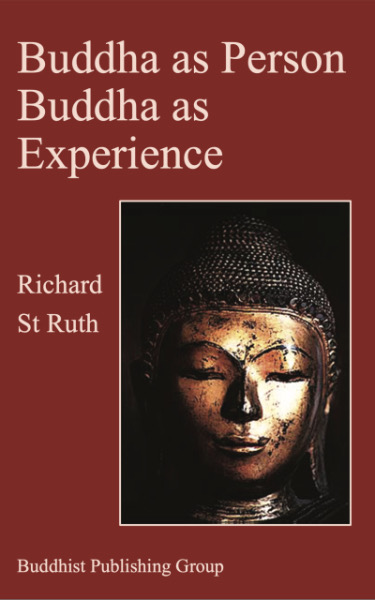
‘Returning to the Essence’ is an extract from Buddha as Person, Buddha as Experience. A spiritual travelogue that invites readers on an inner journey guided by the Buddha — one of the most profound figures in human history.
This artwork is meant to be viewed from right to left
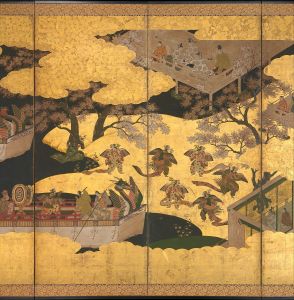
Butterflies. Tosa Mitsuyoshi Japanese late 16th–early 17th century
© The Metropolitan Museum of Art
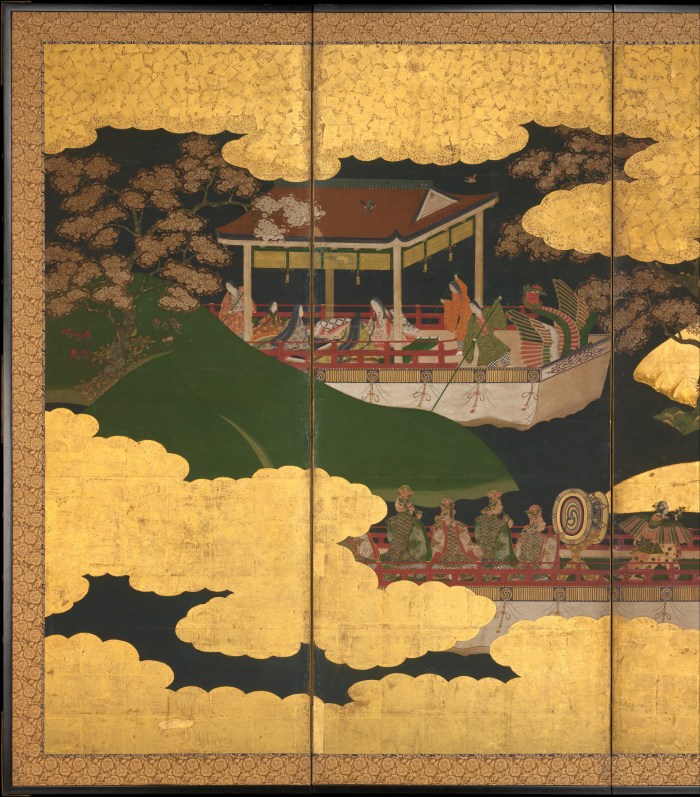
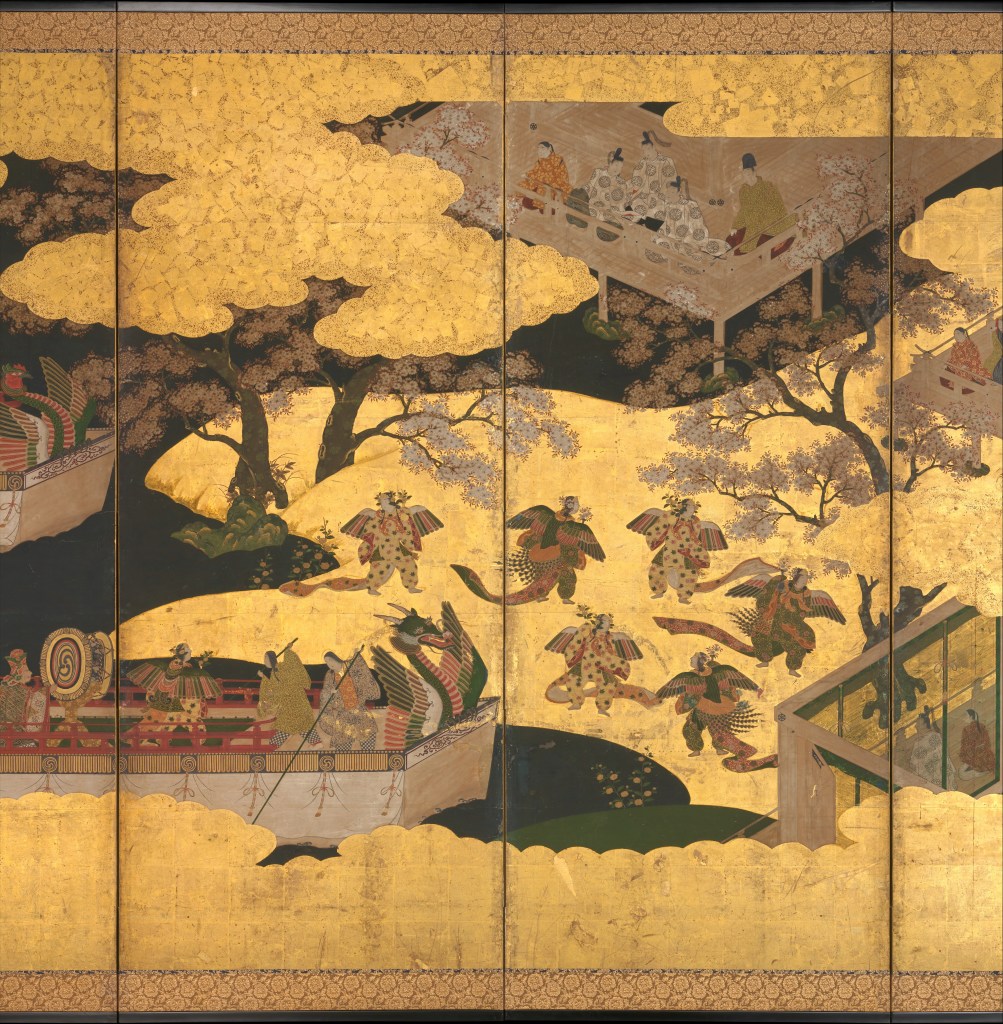
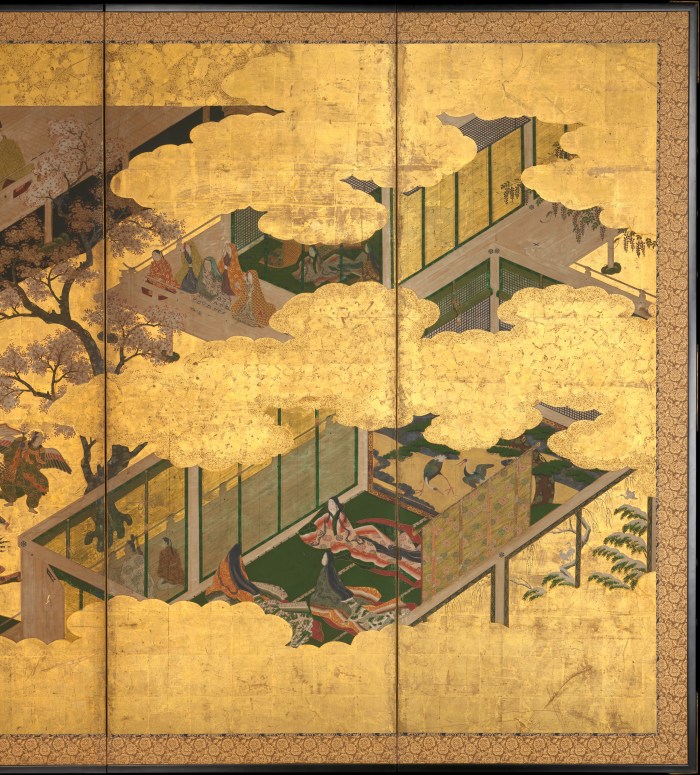
Images: Butterflies, Tosa Mitsuyoshi, Japanese late 16th–early 17th century.
This single screen, one of the finest examples of painting by Tosa Mitsuyoshi, encapsulates the imagined visual splendor of Genji’s Rokujō estate and conflates episodes from two different days in one composition. Ladies-in-waiting from the autumn quadrant of the Umetsubo Empress (Akikonomu) have arrived in Murasaki’s spring garden on a water bird boat on the upper left. The foreground scene takes place the next day, when page girls spectacularly costumed as paradisal kalavinka birds and butterflies of the court bugaku dance arrive at the autumn quadrant via dragon boat. The girls have been sent by Murasaki with flower offerings for the Empress’s sutra reading. The profusion of cherry blossoms throughout the screen illustrates the dominance of the spring season.
Butterflies. Tosa Mitsuyoshi Japanese late 16th–early 17th century
© The Metropolitan Museum of Art
Share:

Categories: Buddhism, Buddhist Insights, Buddhist meditation, Everyday Buddhism
 Buddhism now
Comments