During the forty years of my middle age, all worldly affairs were given up and all secular avocations were omitted. I guarded myself with sincere application and now for the past five or six years, I have been able to stay with the spirit of meditation without intermission. If, however, a man fawns on his temple patrons and alms- paying parishioners in a light-hearted way, or if he is always hoping for benefits or some support or fame whilst trying to perform his meditation, that is just like having a great pain in one’s insides. More often than not these days, teachers and pupils live together in temples making luxury and opulence the object of their lives. The atmosphere of the temple is one of heated busy crowds. People think that the gift of the gab and being smart, are signs of wisdom. Their food is exquisite and their dress is superfine. The Buddhist world is now filled with people of their sort. They have come to think that virtue consists only in the admiration of great and beautiful things, and that if a man merely believes the forms of faith, he has reached perfec- tion in the attainment of dharma. It is lamentable that they make use of their bodies merely to get fame for themselves — these bodies which are so hard to come by in the course of the cycles of existence — and they bury the buddha- heart under the rubbish heap of illusions.
Image:
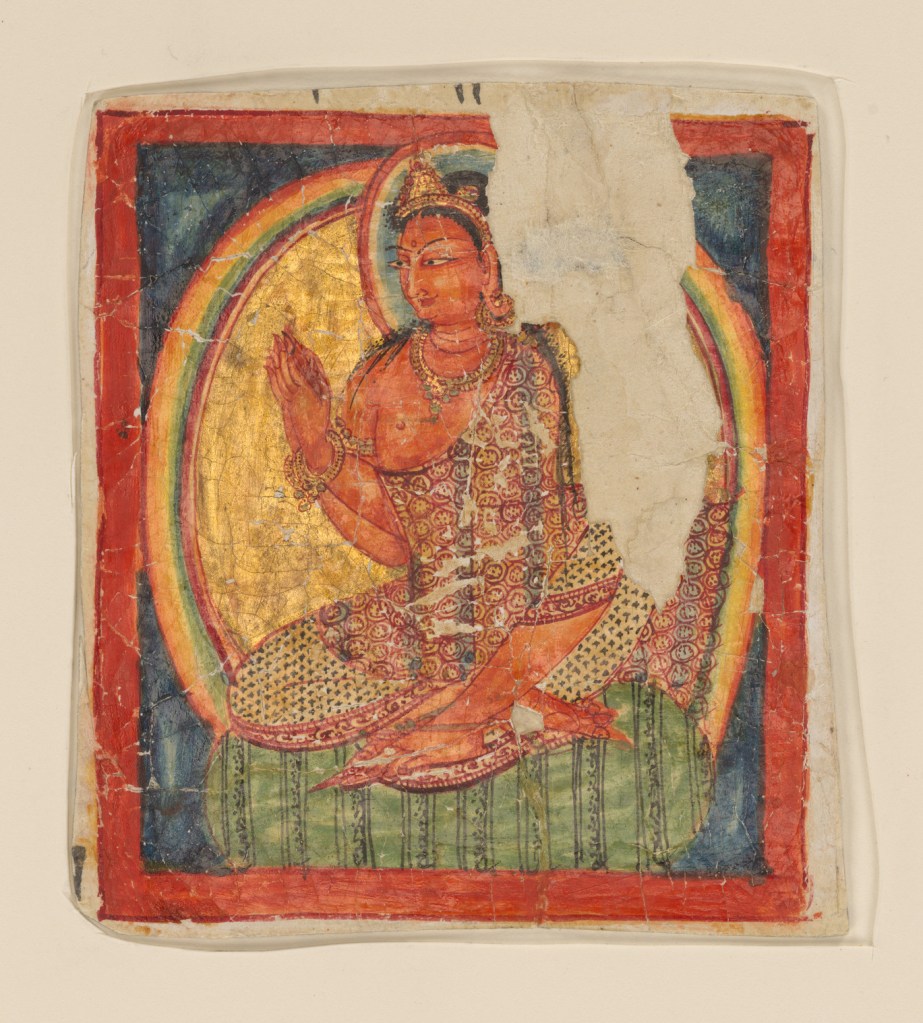
This exquisitely executed miniature painting of a seated royal donor exemplifies the unprecedented quality achieved by Kashmiri artists working on plant fiber papers. This medium, as opposed to the traditional palm-leaf folio, allowed a larger scale format and, properly sized, a new refinement of execution. It depicts a royal worshipper seated cross-legged in lalitasana, a variation of the royal ease posture, and with his hands raised in veneration, gazing reverently beyond the picture frame to the sacred text that occupied the once complete folio. Paintings such as this are firmly associated with manuscript editions of the Prajnaparamita, a Vajrayana text embodying the goddess of the same name. This famous magical text, composed largely of spells and charms (dharani), was widely reproduced, most often in its 100,000 verse edition, as an act of merit. Its recitation was understood to bring protection and material benefit to all.
© The Metropolitan Museum of Art.
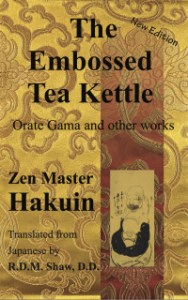
From: The Embossed Tea Kettle: Orate Gama and
other works of Hakuin Zenji,
by Zen Master Hakuin
Translated from the Japanese by R.D.M. Shaw, D.D.
Click here to read more teachings from Hakuin Zenji.
Share:

Categories: Buddhism, Chan / Seon / Zen, Everyday Buddhism
 Buddhism now
Comments