As we deepen our practice, we begin to see the profound relationship between awareness (sati) and wisdom (prajñā/paññā). Awareness is the foundation of all Buddhist practice, as it trains the mind to stay grounded in reality rather than becoming lost in distraction or delusion.
Wisdom, in the Buddhist tradition, refers to the deep understanding of the nature of reality, particularly the realisation of impermanence, not-self, and suffering. While awareness helps us stay present with our experience, wisdom allows us to see the true nature of that experience. Together, they form an inseparable union, each depending on the other for its full expression.
Awareness without wisdom can become mere attention, a practice of observing without insight. But when awareness is combined with wisdom, it becomes a powerful tool for liberation. We begin to see not only the surface of our experiences but the deeper truths that underlie them. We see that our thoughts and emotions are impermanent, that our sense of self is a construction, and that clinging leads to suffering. This insight allows us to let go of attachment and live with greater freedom.
Conversely, wisdom without awareness remains theoretical. It is through the practice of awareness that we bring wisdom into direct experience. By being fully present, we allow the truths of impermanence, suffering, and not-self to reveal themselves. In this way, awareness and wisdom are not separate; they are two aspects of the same practice, each deepening and supporting the other.
From: Buddha as Person, Buddha as Experience.
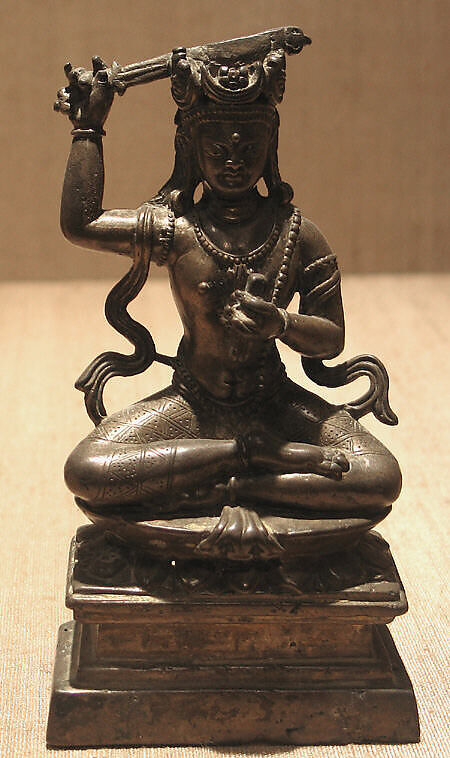
Image:
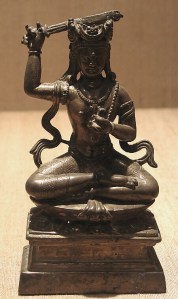
Manjushri, the Bodhisattva of Transcendent Wisdom. The Buddhist embodiment of transcendent wisdom wields a sword in one hand and a manuscript in the other, evoking the cutting away of ignorance and the transmission of enlightenment wisdom, respectively. The crown is distinctly Kashmiri in style, but the rendering of the figure suggests that the work was produced elsewhere, likely in neighbouring Himachal Pradesh.
10th century
©️ The Metropolitan Museum of Art.
‘Returning to the Essence’ is an extract from Buddha as Person, Buddha as Experience. A spiritual travelogue that invites readers on an inner journey guided by the Buddha — one of the most profound figures in human history.

Share:

Categories: Buddhism, Buddhist Insights, Foundations of Buddhism
 Buddhism now
Comments