RIP Harada Tangen Roshi 1924-2018. A simple, kind, happy man, who lived his teaching.
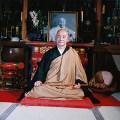
RIP Harada Tangen Roshi 1924-2018. A simple, kind, happy man, who lived his teaching.

Again, let me explain about the path walked by the ancients.

An allegory on truth and interpretation. A group of six blind men endeavour to describe an elephant.
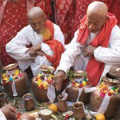
This study examines the translations of dhāranī sūtras made by Bodhiruci in the early eighth century and later Esoteric texts, such as Yixing’s commentary on the Mahāvairocana sūtra and Amoghavajra’s ritual manuals…
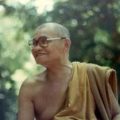
Practice is separate from any posture. It is a matter of directly looking at the mind.
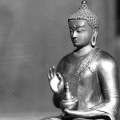
We want genuine happiness, and we can develop the feeling that we deserve it. Then we can move towards having compassion for others. If we really do feel compassion for others, there is no doubt we must also feel compassion towards ourselves…
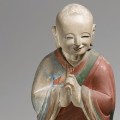
But don’t grasp at the smile — or the flower — or even the words, and most of us do, because we love to attach ourselves to things and meanings, and it’s not about things or meanings.

This painted cover for a palm-leaf manuscript belongs to the Pala- Nepalese tradition. It comes from a palm-leaf edition of the Ashtasahasrika Prajnaparamita Sutra (“Perfection of Wisdom in 8,000 Verses”).
 Buddhism now