A monk asked, “What is the essential meaning of Buddhism?” Mazu said, “What is the meaning of this moment?”
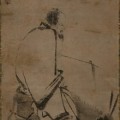
A monk asked, “What is the essential meaning of Buddhism?” Mazu said, “What is the meaning of this moment?”
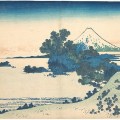
Afterwards, however, as I began reflecting upon my everyday behaviour, I could see that the two aspects of my life—the active and the meditative—were totally out of balance. No matter what I was doing, I never felt free or completely at ease. I realised I would have to rekindle a fearless resolve and once again throw myself life and limb together into the Dharma struggle…

The intimate scale, informality of the figures’ poses, and landscape setting link the painting to Chan-style depictions of Shakyamuni — the human origin of the Buddha — as an ascetic descending from the mountains just prior to achieving Buddhahood…

‘All efforts to reach salvation are inadequate, are moves inside samsara’, if only the beings would recognize their own true face as that of the Tathagata whom they so eagerly seek…

Even Mount Fuji in the distance is dwarfed by the monumental tree…

Question: An academic friend of mine has done some research and come up with the theory that the historical Buddha didn’t really live, that the Buddhist teachings were of a later period. Is the personality of the Buddha important for… Read More ›
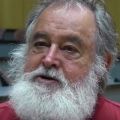
Short film: A Conversation on Chan (Zen) Buddhism with Bill Porter. About 30 minutes
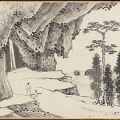
Shenhui thus founded what became known as the Heze (in Japanese, Kataku) school of Zen. The branch largely died out during the early ninth century and is not remembered as a major school. Nevertheless, the doctrine of sudden enlightenment remained a central characteristic that defined the teaching styles and cultural flavour of later Chinese Zen…

