If life were based upon what we liked, then not a single one of us would suffer, because nobody wants to be in pain…
If life were based upon what we liked, then not a single one of us would suffer, because nobody wants to be in pain…
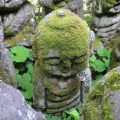
Often, when we say that there is no self, people get worried, or angry. Their attachment and identification to this idea of a self is so strong that they actually become hostile towards us if we begin to say there is no such thing. We need to explain this a bit, therefore, so that you don’t get mad at us. The idea of a self is common to everyone. Whether we come from the East or the West, we have some kind of idea and belief in a self, every one of us, absolutely; it is a fundamental illusion that arises in all human minds. Indians, Thais, Chinese, everybody, is walking around with this idea of a self, a soul, an atman, or whatever we want to call it.

At that time, out of this very skill in liberative technique, Vimalakirti manifested himself as if sick. To inquire after his health, the king, the officials, the lords, the youths, the aristocrats, the householders, the businessmen, the townfolk, the countryfolk, and thousands of other living beings came forth from the great city of Vaisali and called on the invalid. When they arrived, Vimalakirti taught them the Dharma…
Human existence is fundamentally about being alone. We’re born alone, live life as long as we can, and then eventually die alone. Although we may live our lives connected with others, we all maintain our own individual views and belief systems. Just as we each have different facial features, our individual karmic tendencies, which direct our lives, also differ…

Pure Land Buddhism is one of the major schools in the East, yet has hardly made a dent here. I remember once hearing it being described as too ‘Christian’ for Westerners, yet almost all of the other schools encompass the notion of a Pure Land in some way or other. Even in Theravada the three Refuges can easily be interpreted in a Pure Land way. The very essence of it is that one is taking refuge…

Existence is something that can strengthen us, rather than weaken us. We need to put ourselves into perspective; we need to see ourselves in terms of the mass as well as in terms of the individual. When we take life on the extreme level of ‘me’ as a person, we forget the common problem that we share with the rest of humanity…

This handscroll depicts hand gestures known as mudras in Sanskrit, the Indian language in which many early Esoteric Buddhist texts were written. In Japan, the gestures are called insō, the Japanese term for a Chinese word that combines the characters for ‘seal’ and ‘form.’
For instance, the Buddha taught that greed, anger, and misunderstanding are the causes that give rise to suffering. If we ourselves are not yet acquainted with greed, anger, and misunderstanding, then there is no way we can believe this. But to believe it would be foolish. When we know ourselves what greed, anger and delusion are like, and that whenever they arise in the mind, they produce suffering like a fire burning us, then we can believe it on the basis of our own experience…
 Buddhism now