It is said that for the absolute, one has wisdom, and for the relative, one has compassion. After his enlightenment Buddha did not need to teach people in order for them to become essentially wiser; he did so in order to try to help people, to provide them with a means by which some of them could come to the same understanding that he had reached…
Encyclopedia
Buddhist encyclopedia
Zen Principles and Practices
Documentary showing life in a Rinzai Zen temple. ‘Zen Principles and Practices’. Old Zen film 1986ish. Four parts of 29 minutes each. The film is not studio quality, but wonderful all the same.
Part 4 Zazenshin: Acupuncture Needle of Zazen, by Shohaku Okumura
We often attach to that person. We might ask who the person is…
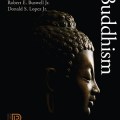
The Princeton Dictionary of Buddhism
With more than 5,000 entries totalling over a million words, this is one of the most comprehensive and authoritative dictionary of Buddhism in English. It is also the first to cover terms from all of the canonical Buddhist languages and traditions: Sanskrit, Pali, Tibetan, Chinese, Japanese, and Korean…
Great Wisdom Sutra from the Chū sonji Temple Sutra Collection
This chapter from the Great Wisdom Sutra (Daihannyakyō; Sanskrit: Mahaprajnaparamita) is one of more than five thousand scrolls of Buddhist scripture.
Zen monks from Hosshin-ji on Takuhatsu
Zen monks from Hossjin-ji doing alms round in the snow (Short film about 7mins).
The Sixth Patriarch of Zen at the Moment of Enlightenment
The Sixth Patriarch of Zen at the Moment of Enlightenment.
The Tibetan Chan Manuscripts
These manuscripts, found in the caves of Dunhuang, include the only surviving texts of a living ‘Tibetan Chan’ tradition. They give us a snapshot of the early Chan tradition from the eighth and tenth centuries…