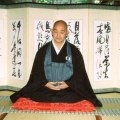
At the beginning each practitioner is given a hua-tou, a kind of koan. For example: What is this? I-Mo-Ko? What is this? The idea is to concentrate your entire attention and mind on this one particular koan or hua-tou: What is this? What is this? What is this? It is different from vipassana meditation where the intention is to be aware and solely aware of what is going on. When you eat, you just acknowledge how that feels—approaching the spoon, touching the spoon, feeling the coolness of the handle, and so on. In koan meditation, however, your attention is single-pointedly directed to this question—What is this?—right now. Initially, it is very difficult to concentrate because all kinds of thinking comes up . . . comes up . . . comes up . . . like clouds, or smoke from a chimney…
History
Dreams: The Forest of the Night, by John Aske
‘I suppose very few of us have passed through even a short period of existence without having noticed the different qualities of dreams. There are those that are evanescent; then there are those that possess you and you can’t shake off; and yet others that may be the urge of your life—its guiding star. Nor can the most superficial fail to observe how dreams and life react on one another.’
Buddhism Now 2012 in review
Happy New Year! Buddhism Now blog 2012 in review. Take a look…
Baby English—sorry! by Tangen Harada Roshi.
The English isn’t exactly right, but we know what he means. It is with great respect that we publish his Baby English Teisho here. If it is read with this in mind, we’re sure you will agree, it is a magnificent dharma thrust.
Deep, deep, deep, great smile; That’s the roots. Why?
Eternal, perfect and bright; Eternal, perfect safety; Eternal, perfect peace; Everything eternal,
Now, here, now, here; Now, here—no change!
All people hope, desire, Desire, desire,
Desire perfect peace; Perfect enough, myself; Always, yes!
Right Livelihood, by Diana St Ruth
So what differentiates a Right Livelihood business from any other? It has to be the dharma element, a basic code of practice within oneself. It isn’t a question of just saying, ‘Oh, we’re a Buddhist publisher so we’re a Right Livelihood business!’
The Mindful Way
Television program on Buddhism with an interview with Ajahn Chah. 25mins
Who are you? By Beopjeong
Don’t get distracted. Don’t look for the Buddha anywhere apart from your own mind. When you are a really free person, you hesitate nowhere when you are only “you and self.” Even when living in the common world, if you don’t become attached to or imbued with worldly things, you can become your true self…
The Beginning of Buddhism and Development of the Schools, by John Aske
The Buddha in effect produced a manual for seeing life as it is and dealing with it and its problems, undeluded by idealistic belief systems or the claims of great yogic power…