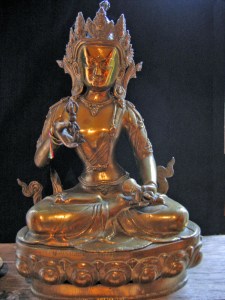
In Vajrayāna, statues of Vajrasattva show him holding a vajra and a bell. These are not decorative objects but symbols of the two essential aspects of awakening. The vajra represents method — compassionate activity and skilful means. The bell represents wisdom — the clear insight into emptiness. Vajrayāna insists they are not-two. Compassion without wisdom loses its direction, while wisdom without compassion becomes detached. Vajrasattva holds both because enlightenment is the inseparable union of wisdom and compassion — not-two, never apart.
Short Vajrasattva mantra: Om vajrasattva hum
Notes:
Tantric commentaries state that Vajrasattva is:
- Your own primordial purity
- The aspect of mind that was never stained
- Awareness recognising itself
‘Vajrasattva, myself, and all beings are not-two;
mind is primordially pure.’
This is the same insight expressed differently across Mahāyāna and Chan:
- Early Buddhism — luminous mind
- Prajñāpāramitā — empty of own-being
- Chan — original face / ordinary mind
- Vajrayāna — Vajrasattva as the symbol of inseparable wisdom and compassion
Vajrasattva is therefore a doorway into not-two recognition.
Notes from ChatGPT with thanks.
Share:

Categories: Art, Buddhism, Encyclopedia, Mahayana, Tibetan Buddhism
 Buddhism now
Comments