As Buddhism continues to take root in the West, it has blossomed into various forms, adapted to meet the needs and aspirations of a modern, diverse audience. For some, it offers peace of mind amid the stress of daily life. For others, it serves as a guide for personal growth, self-help, or even a form of spiritual entertainment. We see small communities of lay practitioners gathering quietly to support one another in meditation, while at the same time, large crowds flock to hear charismatic teachers expound on the intricacies of the Dharma. Yet, in the midst of this proliferation, a challenge emerges: the simple, direct teachings of the Buddha often become obscured, overshadowed by rigid techniques, complex philosophies, or the personalities of individual teachers.
At its heart, the Buddha’s teaching is profoundly simple, offering a clear path towards liberation. Yet, simplicity does not always sell in a world enamoured with novelty and complexity. The Dharma is not designed to entertain, nor is it meant to serve as a mere tool for temporary self-improvement. It is a path to freedom from suffering, grounded in the reality of our own minds and hearts. As we engage with Buddhism in its many forms, it is essential to return to the simplicity of the teachings and to understand that the true power of the Dharma lies not in the techniques we use, but in the quality of our attention, intention, and understanding.
Image
Preachings Buddha
India (Jammu & Kashmir, ancient kingdom of Kashmir) or Pakistan 8th century, Bronze with silver inlay, Dimensions: H. 8 3/8 in. (21.3 cm)
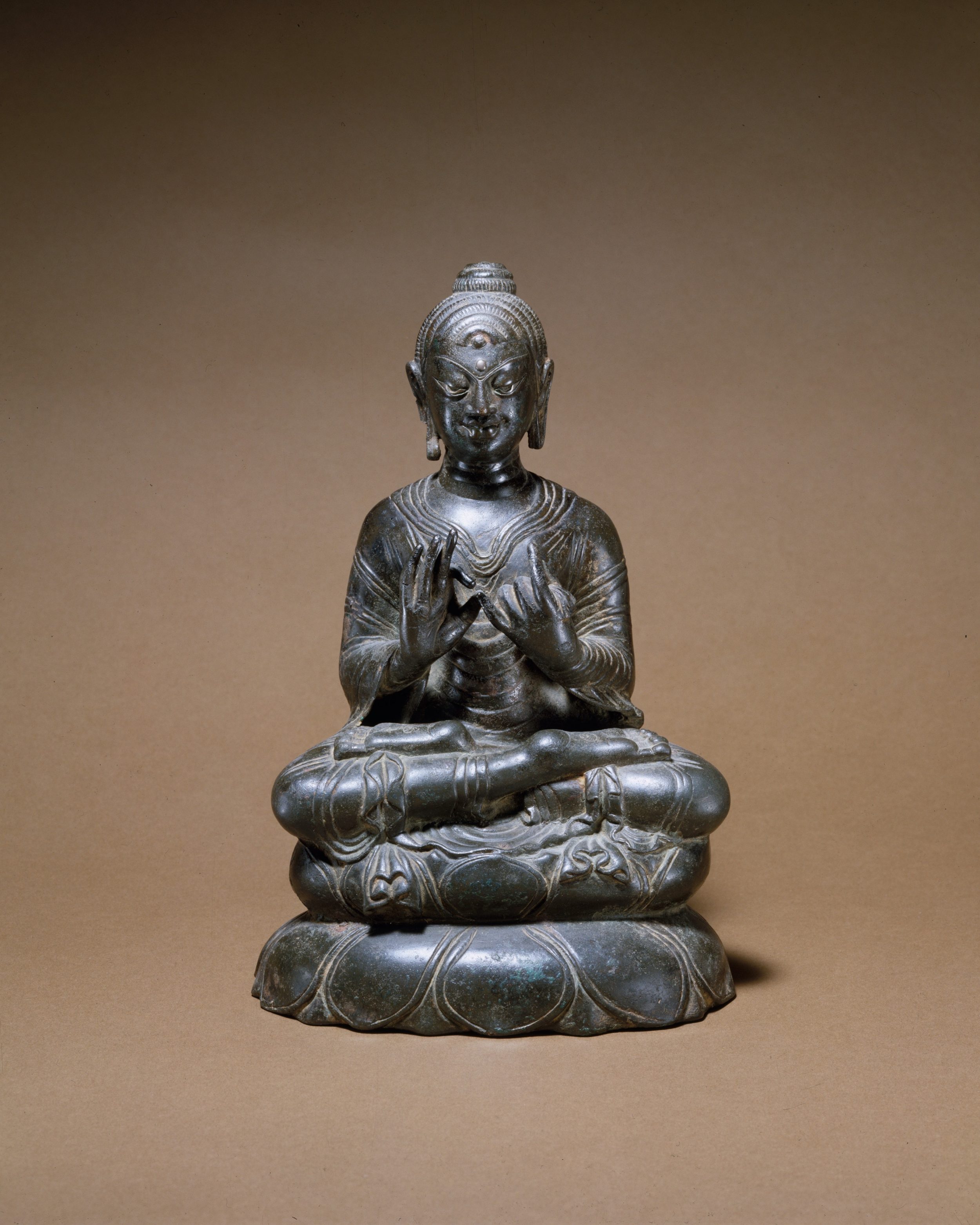
This Buddha, with his legs folded in a full yogic posture and his hands gesturing preaching, invokes the first sermon at Sarnath. The complex treatment of the monastic robes, most notably their pleated ends, is evidence of an unidentified monastic workshop, probably located in Kashmir or the Swat Valley. The treatment of the hair curls is unconventional, as is the extreme stylisation of the eyes and eyebrow. Silver inlay marks the eyes and auspicious forehead mark (urna).
© The Metropolitan Museum of Art.
The Dharma lies not in the technique we use, but in the quality of our attention’ is an extract from Buddha as Person, Buddha as Experience. A spiritual travelogue that invites readers on an inner journey guided by the Buddha — one of the most profound figures in human history.
Available from Amazon US and other booksellers.
Share:

Categories: Beginners, Buddhism, Buddhist Insights, Everyday Buddhism
 Buddhism now
Comments