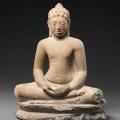
Most significant is the central Buddha touching the earth at the moment of his enlightenment under the Bodhi tree at Bodhgaya, indicated by the branches above his head…

Most significant is the central Buddha touching the earth at the moment of his enlightenment under the Bodhi tree at Bodhgaya, indicated by the branches above his head…
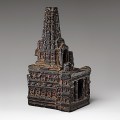
In order that you may gain a clear understanding of the idea of the bodhisattva, I would like to turn your attention to a long-standing discussion in the scholarly world regarding an erroneous belief widely maintained by contemporary scholars. According to their understanding, the bodhisattvas of Buddhist scriptures belong to two almost mutually exclusive categories…

Short talk by the Dalai Lama on the ‘law of causality and dependent origination’. About 25 minutes.
To think ‘I am screwed up’, is a value judgement, isn’t it? ‘Screwed up’ makes the ‘I am’.
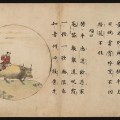
In Zen, a herdboy’s search for his lost oxen has served as a parable for a practitioner’s pursuit of enlightenment since this Buddhist sect’s early history in China. In the eleventh century, the Song-dynasty Zen master Guoan Shiyuan (active ca. 1150) codified the parable into ten verses (gāthā), recorded and illustrated in this handscroll…

A moment of realisation about the way we operate in the world can open doors in our mind for the light to come in and bring insight. It may cause us to cringe a bit when we reflect on how we’ve been in the past, a very uncomfortable feeling. On the other hand…
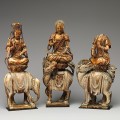
As expressed in these words, we vow to awaken to the Way of Buddha. To receive the precepts means that by repeatedly making repentance, it is possible to awaken to the Dharma and this is why we chant these vows. Using these four vows as a common guide for all mankind…

‘Nothing of this sort needs to be coped with. Why? Because, if avoidable, it will be avoided. If unavoidable, it will be borne. If sufferable, it will be suffered. If insufferable, it will be wept at.’
 Buddhism now