When you are on retreat, restrictions are placed on your physical actions and speech. But there are also mental restraints and limitations. You are not to simply let your mind go wild or indulge in fantasies. Instead, you are to learn to bring the mind into the present.
Buddhist
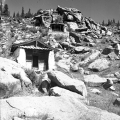
Images of monasteries in Mongolia (most of them destroyed in 1930s).
Some more photographs from the British Library #endangeredarchives project.
Brahma Faring in 21st-Century Mazes, by Sylvia Swain
But first there is the maze which has to be negotiated. It is by definition a labyrinth—tortuous and serpentine—intended to confuse and disorientate. This brings us to the title: Brahma Faring in 21st-Century Mazes. The mind, because of its various functions, monkey origins, and self-deceptions, is very like those fascinating hedge mazes with their convolutions of temptation and the predicaments into which they lead us…
Some notes on Tantra, by Francesca Fremantle
It is possible to do any kind of spiritual practice—not only Buddhist, but Christian or other kinds of practices—with a Tantric attitude, with the attitude of seeing the sacredness in life, of relating our ordinary everyday experiences to this kind of sacred experience…
Meditation huts
Found this wonderful picture of Meditation huts while looking at these old photos from #Mongolia now online at #endangeredarchives via @bl_eap
Sermon of No Words, and Anti-Sermon of No Words, by Trevor Leggett
It is a sermon not by exhortation, reasoning or threats but by example…
Soaked Up, by Trevor Leggett
This is a temple scene. Suddenly in the quiet there is the bursting force of the shrill note of the cicada. It’s ear piercing while it lasts then it stops, and there is the moment when that shrillness is soaked up, soaks away into the stillness of the rocks, the stones, of the temple…
Two Kinds of Language, by Buddhadasa Bhikkhu
The word ‘Buddha’, for example, in everyday language refers to the historical enlightened being, Gotama Buddha. It refers to a physical man of flesh and bone that was born in India over two thousand years ago, died, and was cremated.
Considered in terms of dhamma language, however, the word ‘Buddha’ refers to the truth that the historical Buddha realised and taught, the dhamma itself…