The process whereby Buddhism—which first began as the deeply internal experience of just one ascetic practitioner—has over time borne fruit within vastly different races, climates, cultures and histories, might be likened to the way volcanic magma breaks through the earth’s crust and gushes heavenwards then flows down in every direction…
Mahayana
The Sound of One Hand: Paintings and Calligraphy by Zen Master Hakuin
Short film about 5 minutes. Hakuin’s self-taught, spontaneous, yet masterly and inspired painting and calligraphy, just like his teachings and writings, expressed the mind and heart of Zen for monks and lay followers alike.
Buddhism: What is So-Called Tathāgata Chan
Chinese Chan masters in the earlier periods did not possess a unified definition of Tathāgata Chan and Patriarchal Chan—instead, they wrote with rather ambiguous meanings and loose definitions…
Part 7 Zazenshin: Acupuncture Needle of Zazen, by Shohaku Okumura
Our practice is not so simple that when we sit in zazen, we automatically have fantastic experiences.
The Four Vows. Harada Sekkei Roshi
As expressed in these words, we vow to awaken to the Way of Buddha. To receive the precepts means that by repeatedly making repentance, it is possible to awaken to the Dharma and this is why we chant these vows. Using these four vows as a common guide for all mankind…
A Dialogue on the Contemplation-Extinguished
‘Nothing of this sort needs to be coped with. Why? Because, if avoidable, it will be avoided. If unavoidable, it will be borne. If sufferable, it will be suffered. If insufferable, it will be wept at.’
Part 5 Zazenshin: Acupuncture Needle of Zazen, by Shohaku Okumura
If buddha-dharma is the self, why do we have to study from others? Why do we have to practise in order to change the self? Why do we have to practise? We already have buddha-nature. We can do whatever we want. What is wrong with this kind of view? That is the question. Dogen’s reply is as follows:…
The real part 5 of Zazenshin. Sorry for the slip up last time.
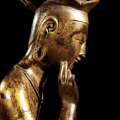
Pensive Bodhisattva
The origin of Buddha statues of this style is the figure of Prince Siddhartha in contemplation pondering the four phases of life (birth, old age, sickness, and death). Established first in India, the Pensive Bodhisattva was made in countless numbers in China but not till it came to Korea…