However hard I practise seeing my true nature, I am always brought back into birth and death. What method must be practised in order to obtain the birthless and the deathless?

However hard I practise seeing my true nature, I am always brought back into birth and death. What method must be practised in order to obtain the birthless and the deathless?
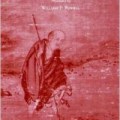
Earnestly avoid seeking without, lest it recede far from you.
Today I am walking alone, yet everywhere I meet him.
He is now no other than myself, but I am not now him.
It must be understood in this way in order to merge with Suchness.
Tung-Shan

Form exists because the mind produces it; void exists because of that which cannot be perceived. It is also said…

The Buddha: Without mark is this perfection of wisdom. Just as the element of space and the element of air cannot be approached by the mark of the total reality of any dharma, just so the perfection of wisdom.
The Questions of Suvikrantavikramin. Perfect Wisdom: The Short Prajnaparamita.
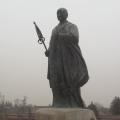
On my journey, I think I found the other side of Buddhism, predominately the role of the mind. Buddhism is not as criticised or attacked in the historical Marxist approach, the materialistic approach which maintains that the mind is really not important and that our material condition determines everything. Some of the monks in the monasteries laid down their lives to defend their faith…
If life were based upon what we liked, then not a single one of us would suffer, because nobody wants to be in pain…

At that time, out of this very skill in liberative technique, Vimalakirti manifested himself as if sick. To inquire after his health, the king, the officials, the lords, the youths, the aristocrats, the householders, the businessmen, the townfolk, the countryfolk, and thousands of other living beings came forth from the great city of Vaisali and called on the invalid. When they arrived, Vimalakirti taught them the Dharma…

This handscroll depicts hand gestures known as mudras in Sanskrit, the Indian language in which many early Esoteric Buddhist texts were written. In Japan, the gestures are called insō, the Japanese term for a Chinese word that combines the characters for ‘seal’ and ‘form.’
 Buddhism now